
In the year 2025, there are plenty of resources online that answer the question: why does my snorkel mask keep fogging up? Before my 2025 trip to Hawaii, I consulted numerous YouTube videos and Reddit discussions on this topic. Chiefly I wanted to avoid repeating my sub-optimal snorkeling experiences from the 2015 cruise trip and the 2009 trip to Trunk Bay and Caneel Bay. One regrettable aspect of these past trips was that I couldn’t stop my lenses from fogging up when snorkeling, despite having done what I perceived to be adequate preparation.

Not surprisingly, today’s online resources are actually worse than in 2009 and 2015. Blogs with insightful resources have gone dark, long replaced by either inaccessible tribal social media, or exceedingly-short clickbait clips tailored to today’s audience. Chiefly the latter peddles quick fixes showing the “hows”, but not the “whys”. The thing is, lens-defogging, like most things in life, follows Tolstoy’s law – that every happy family is alike, but every unhappy family is unhappy in its own way. There’s a long list of things that each alone can fog up your lenses. You need to remediate each and every one of them, to get to the “happy path”.
During my 2025 trip, I finally attained defogging nirvana. I experienced crystal-clear views from my mask for two hours of snorkeling at Hanauma Bay, for the first time in my life. Nobody had told me that this was the norm for snorkeling. One shouldn’t have to stand up on shallow reef mid-snorkeling to address fogs, ever. Until I had this experience, like countless new merrymakers all around Waikiki, I did not regard having to deal with fogging every 5 minutes as anything unusual.

- Things experts take for granted
- I am no expert, but
- TL;DR – my defogging checklist
- Mask fit is more critical than defogger
- In case of doubt, scrub some more
- How mask defogging actually works
- Maximize defogger adhesion to lens
- Apply the thinnest film of defog
- Give the defog time to bind or dry up
- Reduce thermal differential
- Coat defog film with a thin sheet of water
- Breathe in while strapping mask on
- Confirming water sheet at home
Things experts take for granted
One would think that by the year 2025 I’d have grown wiser. Just consult an actual diving expert, in person. But I am who I am. I usually try to figure out stuff by myself, even if that means a more painful journey. Besides, most experts have long forgotten what it was like to be a novice. There are things they now take for granted that don’t cross their minds to mention to a beginner.
Take the two-hour fog-free session I just nirvana’d. Rarely does an expert care to mention such expectation to a beginner, because that’s the assumed experience, at least when they themselves go out diving. Instead, experts hedge their coaching by giving bonus tips to address (in their minds, the rare) cases where lenses still fog up mid-diving. A common fix involves lifting mask skirt and letting in some water, to swirl around lenses and clear fog. I applied this “fix” every five to ten minutes in the past, taking it to be the norm. Little did I know; having to run this fix meant that my defogging prep had failed.

Defogging tutorials often cite car windshields to explain how condensation and thermal differential cause fogging. That’s great. But it also misleads folks to assume that mask defogging and windshield defogging work the same way. Or at least that’s what happened to yours truly. Until this trip, I’d always assumed that I had to keep the inside surface of lenses “dry” for a fog-free experience. Why? Oh well, because my windshield defogger blows dry hot air to clear that condensation. So, why wouldn’t I keep lenses dry too, after I apply my spit or a commercial defog?
It turns out that you ought to keep the inside surface moist, in fact, even wet at all times. That’s why all tutorials include a “rinsing” step, before you put the mask on. However, calling this step a “rinse” is quite unfortunate. It led me to believe that I was washing excess defog away, leaving only an atomic-thin layer protecting my lenses. Some tutorials even preach this misconception. Some sources advise “rinsing” in a bucket well ahead of stepping into the sea. This has unforeseen consequences, to the especially-gullible, like yours truly. I used to “rinse” and “dry” my mask in my hotel room, the night before. I then jump into the ocean the next day with a dry mask on my face to my own detriment.
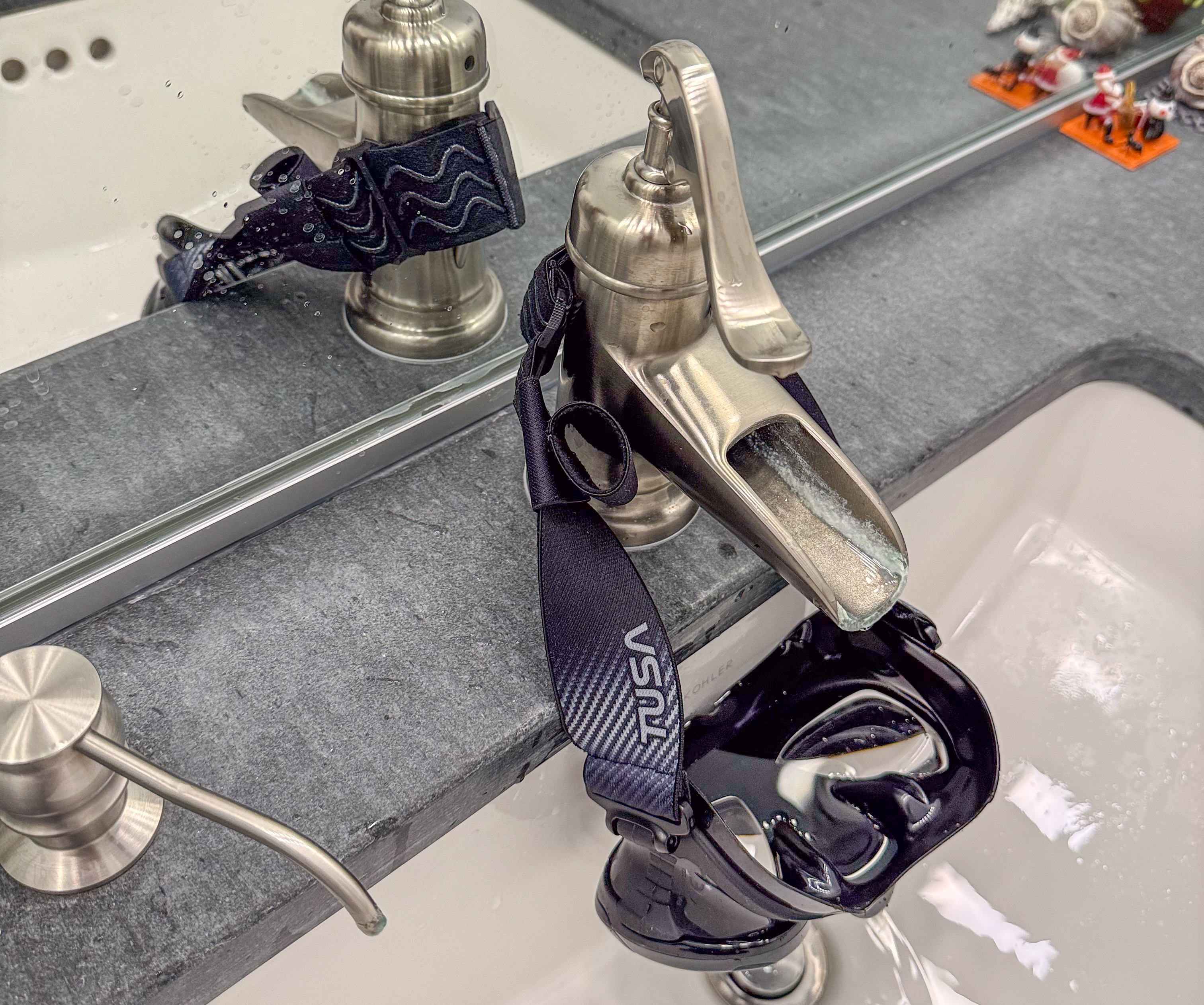
I am no expert, but
I’ve done experiments with old and new masks at home before the trip, based on pre-trip research. I conducted more experiments while snorkeling onsite at Oahu, many of which confirmed or eliminated some hypotheses I arrived at from research. I tried to vary only one factor/parameter at a time, to improve anti-fogging, or to destroy the defogging experience. But these are not scientifically rigorous, and definitely not comprehensive. With that said, I did arrive at a simple sequence of prep steps that consistently yielded success during my short trip, with no less than six snorkeling sessions at different locations under different conditions. A summary of these steps is found in the next section.

I am aware that Pope said, “a little learning is a dangerous thing”. Sometimes a beginner gets lucky, and happens to snorkel fog-free for two hours straight. Now this person thinks their exact prep steps and this particular sequence of actions constitute the true enlightened path. They even believe that this path guarantees the same crystal-clear snorkeling experience for everyone else. After all, we know from Skinner that even pigeons can be superstitious and develop unwarranted rituals they perceive to yield actual results. So take my spiel with a grain of salt.
I hope to explain things experts probably regard as obvious, but you haven’t heard from anywhere else. I feel like an imposter, but that won’t stop me from writing this. Let me reference a new drop from Adam Ragusea of the “I salt my cutting board” fame. He started that monologue on the topic of explainers-vs-experts, with the line: “hey, fake internet expert Adam Ragusea here”. He felt like an imposter too, but that didn’t stop him from talking about how he started fires.
I assume that this post of mine ranks at the bottom of search results. So, you have already watched countless videos explaining mask defogging before you got to this. You also know that a new mask will often have its lenses covered by an invisible silicone film during manufacturing – no amount of defogging will help you if you don’t make a one-time effort to scrub this film away. You know spit and baby shampoo work too, but a bottle of commercial defog is actually better and lasts your lifetime anyway. Just in case you landed here out of context, first check out these video tutorials on the basics: from Circle H Scuba, and from Leviathan Scuba. Following short clips fill in a few additional gaps: from @krakenaquatics, from @TheScubaDivingChannel, and from @KaiKanani2.
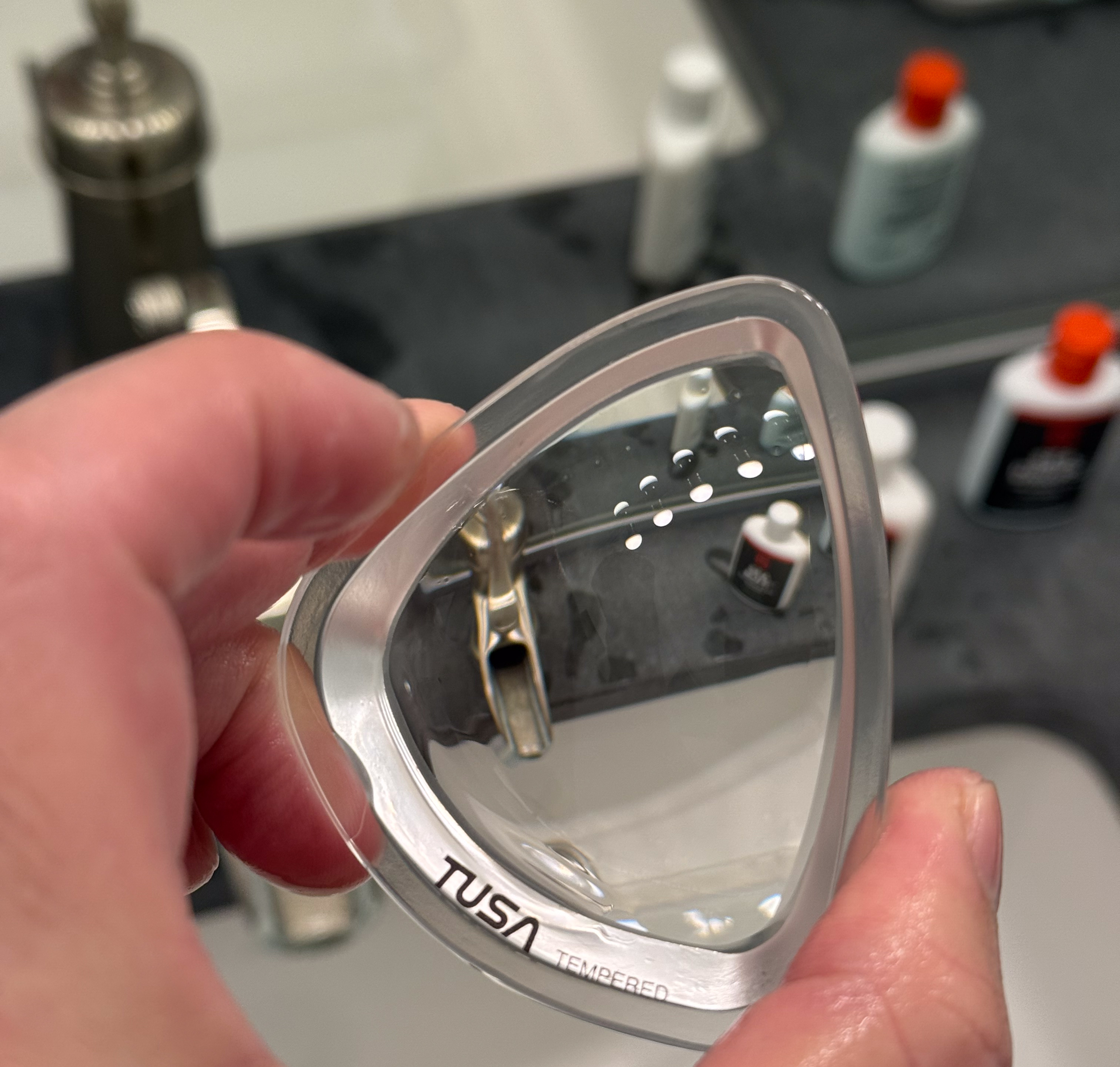
TL;DR – my defogging checklist
One-time prep for a new mask
- Buy or rent a snorkel mask with tempered glass and a silicone skirt that perfectly fit your face such that no water can leak in ever, for a two-hour snorkeling session.
- Scrub the inside surface of new lenses, six times or more, with toothpaste or lens scrub, to thoroughly strip the invisible silicone film left from factory.
The night before each snorkeling trip
- Rub lenses with baby shampoo, and then rinse them with fresh water, to get rid of dirt and grease.
- Let mask and lenses dry overnight.
As you head out to snorkel
- Confirm that lenses are completely dry.
- Apply a the smallest possible amount of lens defogger to the inside of each lens, and smear it all over each lens in overlapping circles.
- When doing this the first time, try to squeezed out too little defog. You won’t be able to smear it over the entire lens surface. You’d leave some parts dry and uncovered.
- Give it a tiny little more of that stuff to cover the entire surface. Any more defog beyond this amount is excessive, leaving gooey blobs that work against defogging.
- Do not touch lenses further. Let defog sit for at least 1 minute to bind. This thin layer of defog should dry up in mere minutes, and can be left untouched on lenses for at least a day.
At the reef
- Step into the sea, and dunk your head in too – this wets and cools your face.
- Dip the mask in the sea, and immediately lift it out, draining all water from it – this leaves a thin sheet of water glued to the inside of lenses, with the defogger acting as a binding agent.
- Strap the mask to your head while breathing in air – this creates a snug mask fit.
- Snorkel and profit

Mask fit is more critical than defogger
I stayed across the street from Kuhio Beach for a part of my trip. Several times a day, I simply walked out of my building into the first Kuhio pond, to embetter my swimming skills. I learned to breathe properly while doing freestyle strokes. But most importantly, I incrementally arrived at the above defogging checklist, while snorkeling at this pond. There are surprisingly large number of fishes to be found by the stone walls surrounding this pond – the same large variety seen at Hanauma Bay. But that’s for another post (now posted here 2026-01-10).

I figured out that by “rinsing” my mask as experts taught, I accidentally washed most defog away. When I started to simply “wet” my mask, I got much better results. I could then see that I applied way too much defog. So, I reduced defog to a thin smear. Now I was able to snorkel fog-free for five to ten minutes… until water started to seep in. Eventually I had to stop snorkeling to drain water out of my mask. In the past, I regarded leaks as the norm. And in fact I relied on some amount of water inside the mask to clear recurring fog. But that was before I became enlightened in the art of defogging.
Now that I could properly defog, water leaks created a problem. It turned out that even a small amount of slashing water in the mask rinsed away the thin layer of defog. Very soon no defog was left, and I would have to again cleanse lenses with shampoo and fresh water, dry them, and re-apply defog. This severely diminished an otherwise fun snorkeling experience.
This was when I empirically arrived at that “strap mask on while breathing in air” step. It worked for me. Your mileage may vary. Initially I had my straps set too loose. And the mask seal became broken, if I as much as twitched a facial muscle or cracked a smile. At first, I wasn’t quite comfortable with the sensation of a slight vacuum created by a snug mask against my face. Incrementally, I tightened the strap until leaking stopped – the sweat spot.

Then I learned to gently strap the mask onto my head as I breathed in. This avoided uneven forces from a pushing hand, and instead relied on atmospheric pressure to evenly settle the mask onto my face. When properly seated, the nose pocket of the mask and the silicone skirt stopped my nose from further breathing. But I continued to breathe in through my mouth, as I tweaked the strap. With a proper mask seal, I no longer needed to contain my smile when a green turtle showed up in my view, right outside the Kuhio pond.

This strap refinement does not work, if your mask does not actually fit your face. You will not find a sweet spot, and you will iterate on the process until the strap starts to hurt you. Over-tightening a mask deforms the shape of its silicone skirt beyond design constraints, and you will not get a proper seal. Fortunately, I did do my research before the trip. I tried and bought a quality mask with great silicone skirt and strap, at a local store, after confirming fit with with a fit test. Perhaps bring your own snorkel to a fit test; biting down on the tube does change the shape of your face.

Mask fit is more critical than the type of defogger you use. This really should be more widely emphasized. If you pick the wrong defog, or you forget to even bring it to the reef, you can always borrow from your buddy, or just use your own spit. If you did not bring a mask that fits your face, you don’t have a snorkeling experience, period. Here are two excellent videos to help you find the right mask: from Leviathan Scuba, and from Dive Wise.
Do not use a mask with a nose purge valve. It may seem like a great feature. But it’s actually a bandaid for ill-fitting masks. I had them purge valves before, with my ill-fitting masks. They always leaked tiny amounts of water, even when the mask didn’t. I have no use for purge valves in my well-fitting TUSA mask anymore. It is one fewer factor to worry about, when dealing with mask seal and defogging.
Let me repeat it again. Any leaks in your mask will soon wash away that preciously-thin defog film you manufactured.
In case of doubt, scrub some more
Before my defog enlightenment, I hadn’t put much thought into lens scrubbing. I ceremonially scrubbed my previous lenses because tutorials said so. I smeared toothpaste on my lenses and let them sit overnight, thinking that some magical reaction would chemically cleanse them. I thought of it more like a gentle cleaning of my everyday prescription glasses, than a rigorous sanding process to mechanically strip away a coating of invisible silicone. This probably contributing to my past fogging woes.
You have already watched the defogging videos from Circle H Scuba and from Leviathan Scuba. I won’t repeat great advices on scrubbing from them. I’ll just say that this time I decided to buy a commercial scrub, instead of using toothpaste.
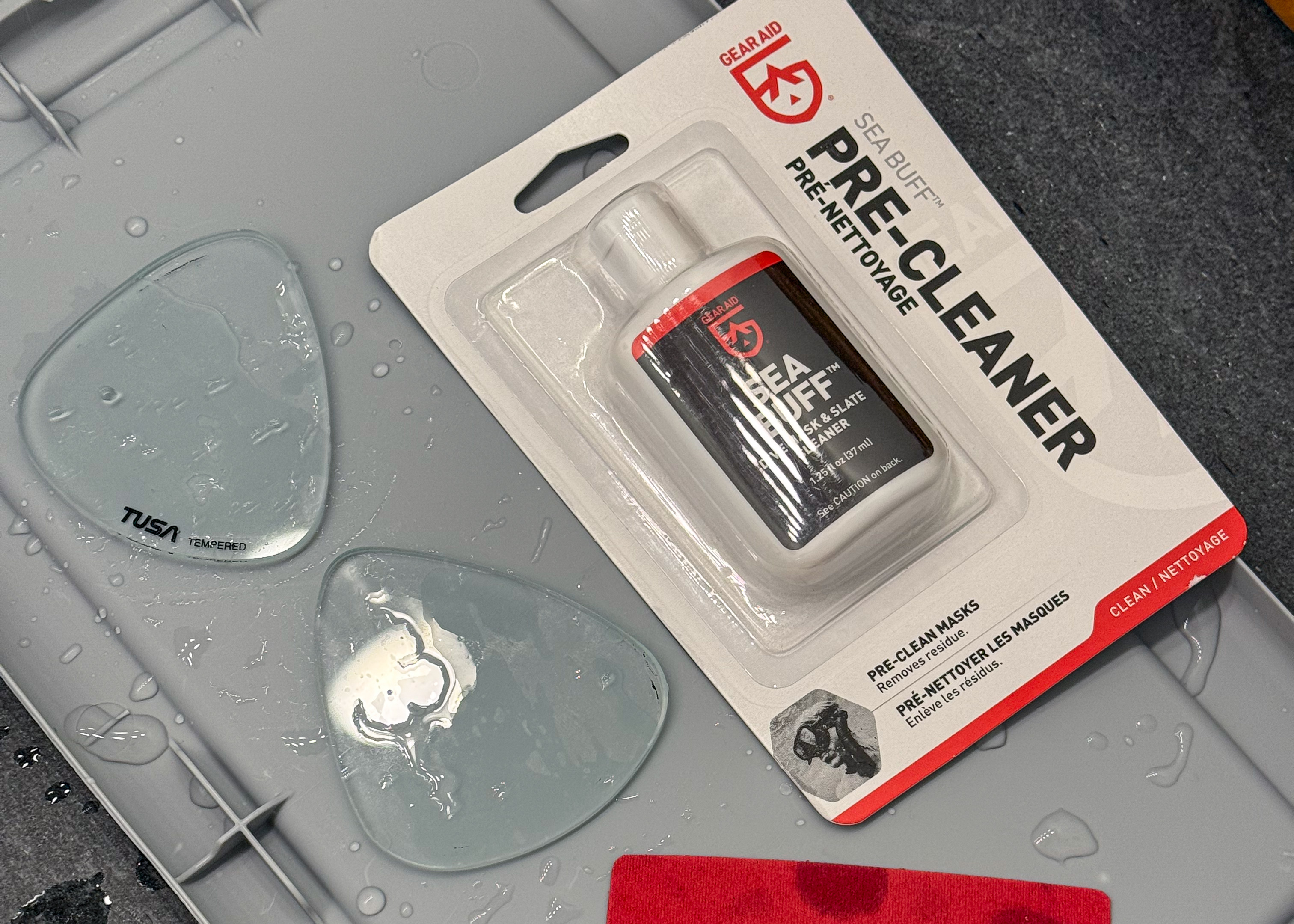
If you are myopic, get a mask that takes replacement lenses; aka optical lenses, or prescription lenses. That’s what I did. I bought two masks: a TUSA Intega with prescription lenses, plus a cheap TUSA Powerview mask with regular tempered glass lenses, as a backup. I didn’t think these purpose-made prescription lenses would have residual silicone coatings on them. But I still scrubbed them a lot more than six times, just like I did with regular lenses from Powerview. I wan’t going to let half-scrubbed lenses ruin my vacation.
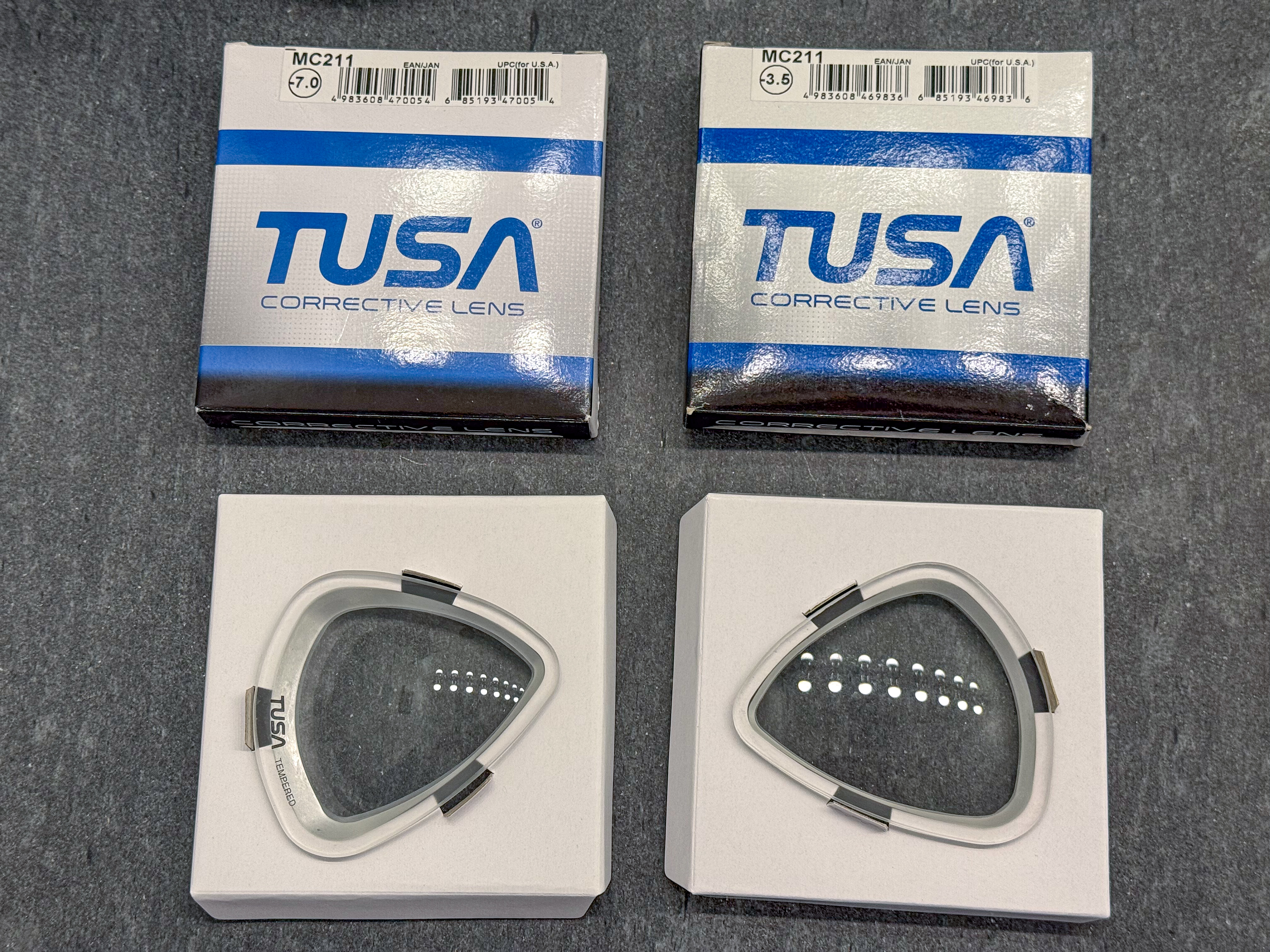
I found that you need to “shake” the scrub bottle well before trying to squeeze a drop onto your lens. The scrub is basically a half-gel with sand-like particles in it. Those particles do settle at the bottom.
And these sand or sand-like particles did alarm me. I was supposed to forcefully rub them against prescription lenses I custom-ordered. ChatGPT assured me that these were not quartz sand, but other softer grit. Yeah, right. I tentatively scrubbed it very softly on Intega’s original lenses – I was replacing them with optical lenses anyway. Then I carefully examined the lens surface after rinsing, and saw no scratch marks. I scrubbed harder. Still no scratch marks. I scrubbed now very rigorously. Still looked fine. So the scrub was safe to use.
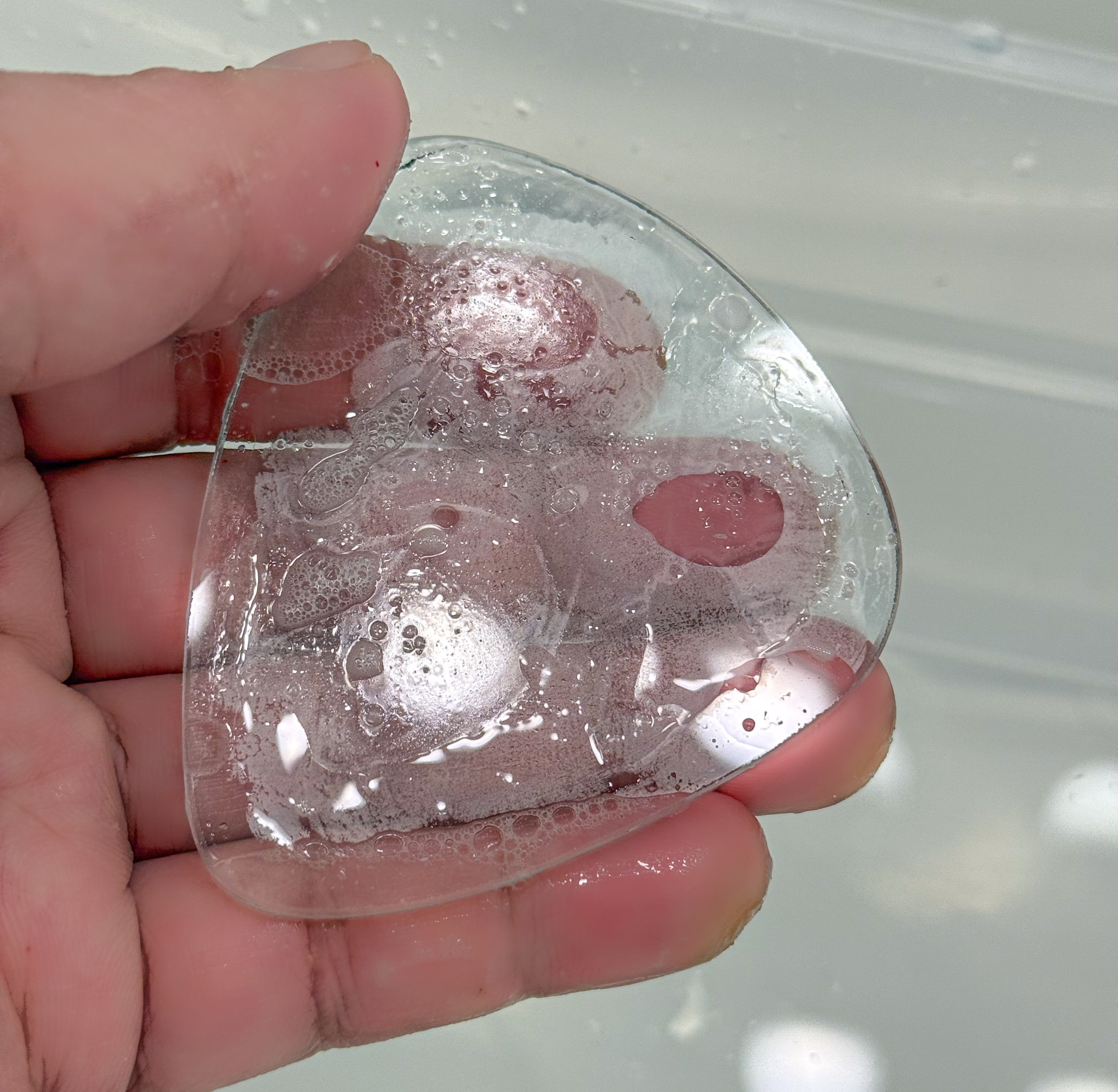
Now I scrubbed those prescription lenses and Powerview lenses for real. Many times. I smeared toothpaste on lenses, and left them overnight, hoping for extra supernatural help. Then I scrubbed many times more, with the gritty scrub.
I can’t tell you how many time is enough scrubbing. Only you can decide. Since my prescription lenses were detached from its silicone skirt, in theory I could have used a lighter to burn the coating away. But I didn’t want to risk it just a few days before my trip. You can consult the last section of this post on water sheet tests I stumbled upon while figuring out how defogging works. In theory, you have done enough scrubbing if you get a nice thin sheet of water on your lens.
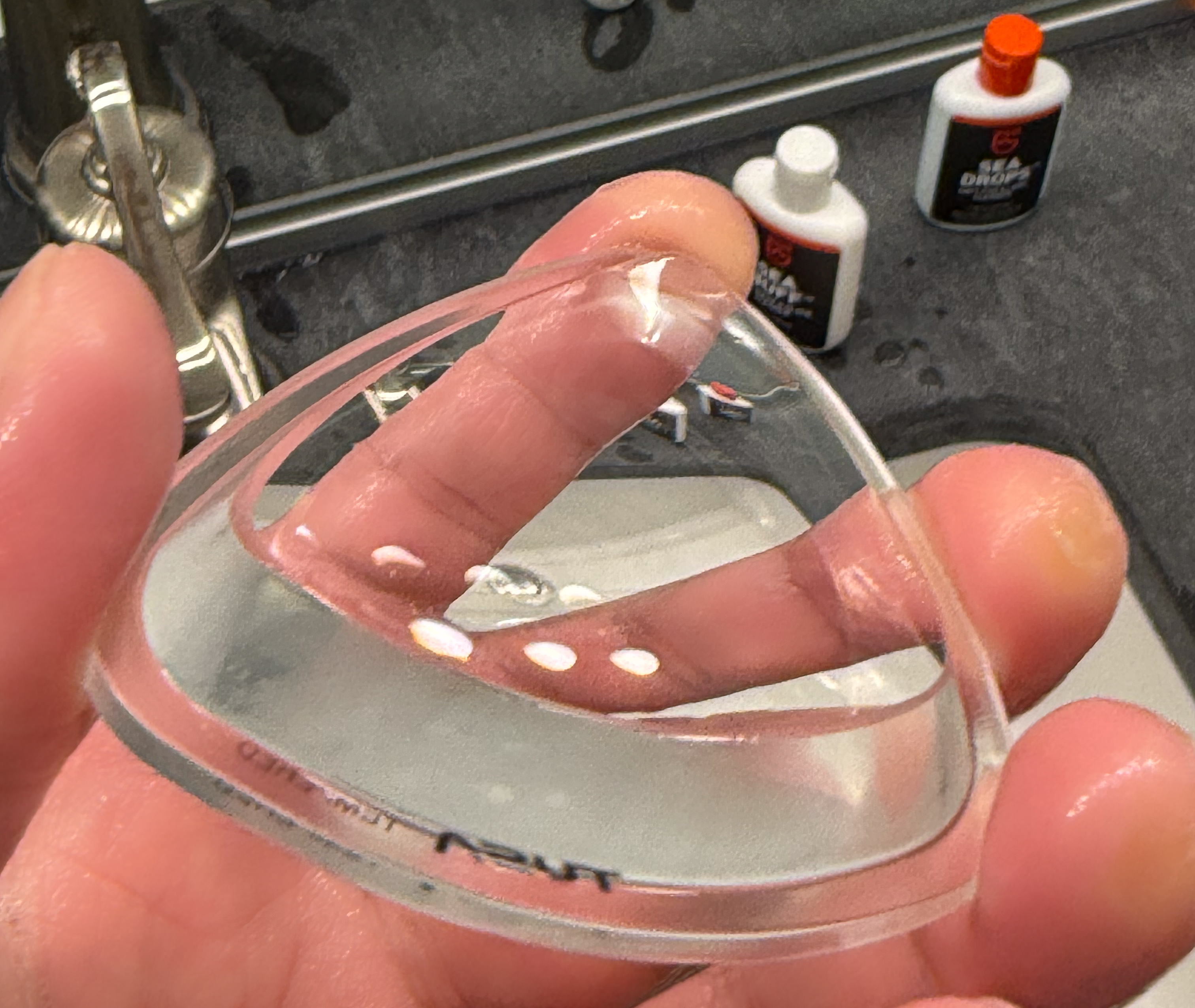
One last thing. After several snorkeling trips, it may be wise to scrub your lenses to get rid of stubborn dirt that you can’t easily cleanse away with baby shampoo. That’s what experts advise. And that’s what I did during my trip. But I don’t know if this was absolutely necessary.
How mask defogging actually works
If you really need to know why my defogging checklist work, you can’t avoid knowing the physics behind mask defogging. I am no physicist. But that won’t stop me from explaining it the way I understand it. You can always follow up yourself by researching keywords mentioned here.
Your mask traps air between its lenses and your face. This trapped air captures some moisture naturally. Your face heats up this moisture, and it condenses on the inside surface of a lens which is at an equilibrium with the water, thus colder. Fogging is caused by lots of tiny water droplets beading up – meaning each droplet contracts into a ball due to surface tension. These beads sit on the lens, scattering light in every direction, and you perceive the result as fogging.
One of my early misconceptions was that I would use a defogger to get rid of water beads, like a car AC evaporates and blows away all condensation on the windshield. But mask defogging doesn’t work that way.
Instead, you use a defogger to create a molecularly-thin film covering the entirety of a lens. It’s like gluing an incredibly-thin sheet of transparent film to the lens. This film, unlike the lens surface, is hydrophilic – water droplets find the film incredibly irresistible. A droplet won’t bead up when it is in contact with this film. The droplet wants to hug this film to death. So the droplet flattens itself molecularly-thin too, and glues itself to the film, becoming invisible to you in the process because it no longer scatters light.
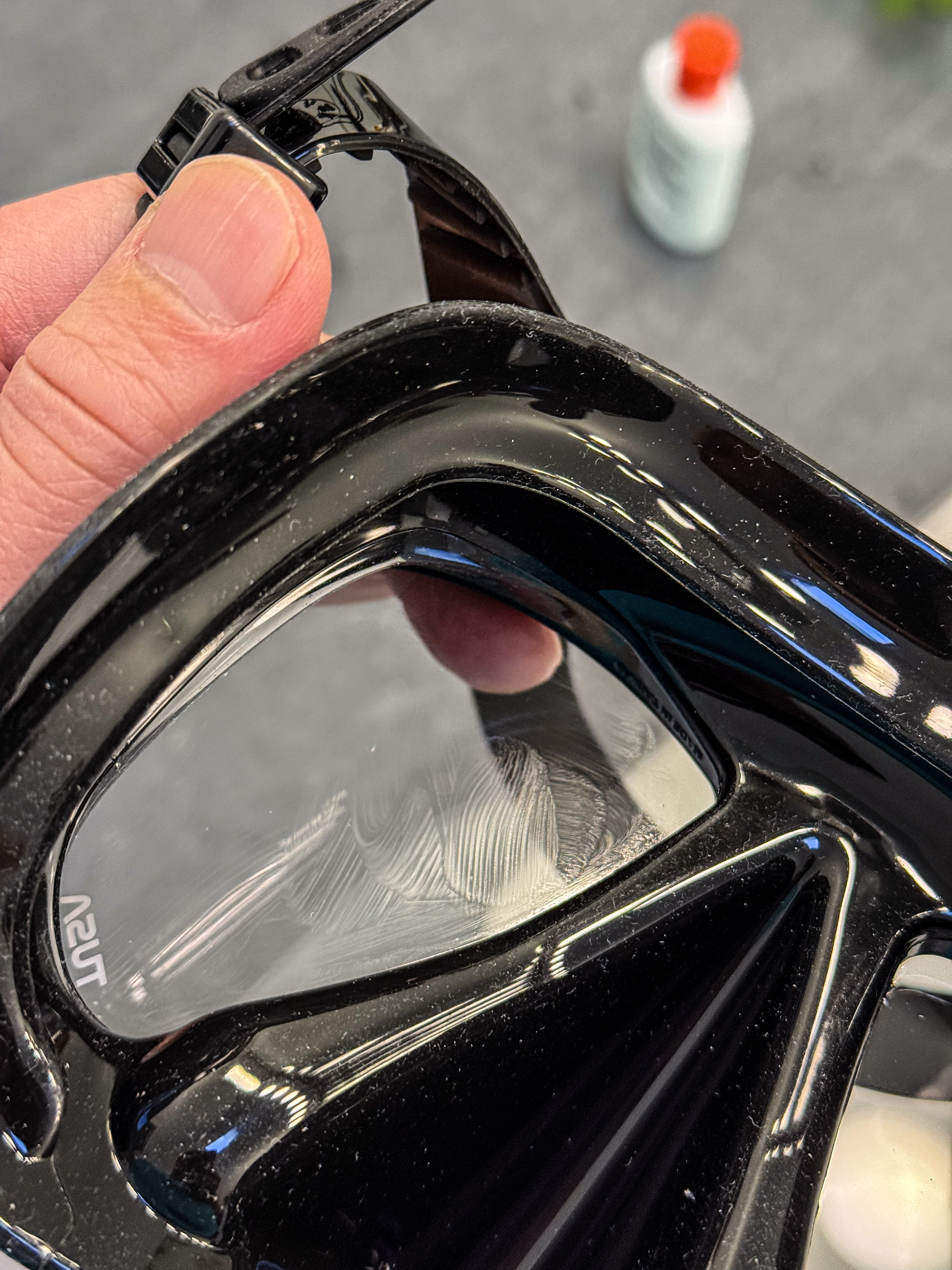
If you dip a lens treated with this film into water, and immediately lift the lens out, then almost all water will drain from the surface of this film, except one single continuous sheet of water that hugs the film. This water sheet is formed by countless former water droplets which are no longer. They are now a single conjoined, thin, and flat sheet. The sheet is thus 100% transparent to your eye. Does this remind you of a step in my defogging checklist? Perhaps step 9?
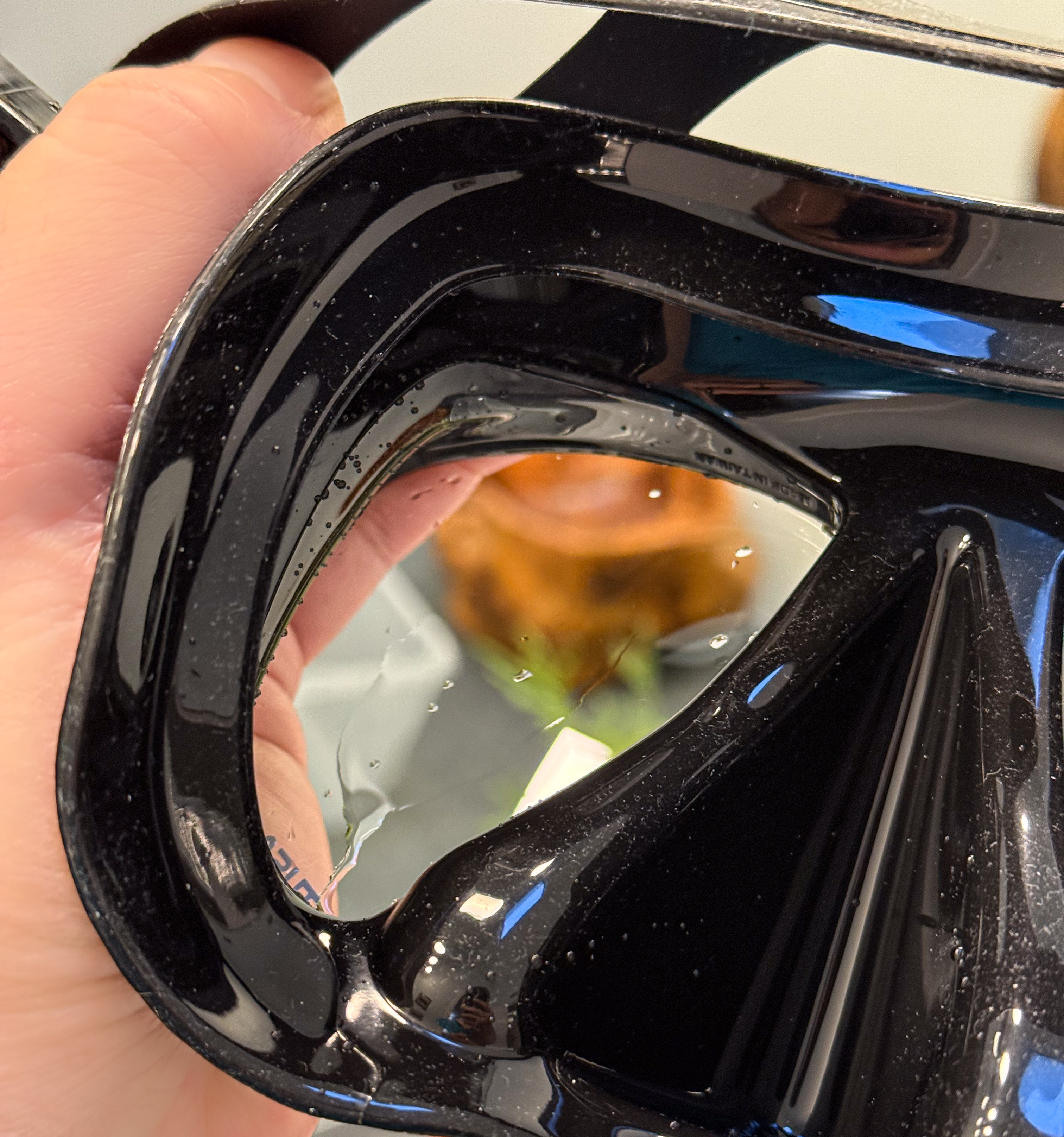
So you strap the mask to your head, and the world looks clear through lenses. You launch into your snorkel. What happens next? There are still air captured between the mask and your face. There are still moisture in it. If your face is hot, and you snorkel in coldish water, more moisture from this captured air will try to condense somewhere. With a well-working water sheet glued to that defog film, any newborn water droplet will just get unceremoniously absorbed into this sheet. This is how mask defogging works, when all the stars align.
This post is really not about when all the stars align. It is about which of these stars can go askew and ruin your perfect defogging experience. For instance, if a large quantity of moisture condense at once because you launch into a dive with a warm head into cold water, fog will still form briefly on the sheet, until all droplets are eventually absorbed. This is partially why there is a step 8.
And if your mask leaks water, or you get a mask with a purge valve despite my objection, that water slashing in your mask will soon wash away that molecularly-thin defog film. And you are back to square one. Thus the step 1.
Maximize defogger adhesion to lens
Every time you prep your mask, you essentially re-manufacture a defog film from ground up. You can’t repair a film you snorkeled with, from yesterday. After a day, that salt water sheet on the film has now dried up into little salt crystals with all types of other minerals in it. If you wash your mask after every trip like I do, well, that defog film is washed away within the first few seconds of the rinse.
Several factors influence how well your defog film glues to a lens. The first is cleanliness of the lens surface. I use baby shampoo to clean my mask and lenses, aka step 3 in my defogging checklist. Why? Because that’s what most experts advice – baby shampoo’s got very few unnecessary ingredients outside of surfactant. That leaves nothing on the lens after rinsing to come in between the lens and its defog film. I use the same soap to clean my prescription glasses. So that’s what I use on my snorkel mask, in fact, after every snorkeling session. I look at lenses after rinsing, to confirm that nothing remains stuck to them. Anything other than a lens itself will degrade the next defog film you apply, and possibly serve as magnets to aspiring water droplets and cause local fogging.
You need to allow the lens surface to completely dry out (step 4 and step 5), before you apply the defog (step 6). If you smear defog on a lens with leftover water droplets, you greatly dilute the tiny amount of defog you apply, and you distribute defog unevenly across the lens. As a result, the performance of the defog film greatly suffers, if you even get to glue a film to the lens at all. I usually just leave the mask to dry overnight naturally. But in a pinch, I’ve wiped water off with a clean cloth with no ill effect. At first I agonized over mineral residues streaking over lenses when naturally dried. Then I worried about tiny lint residues, when wiped with a cloth. But in the end, I found that a few lint and some mineral streaks caused no perceivable issues in defogging.
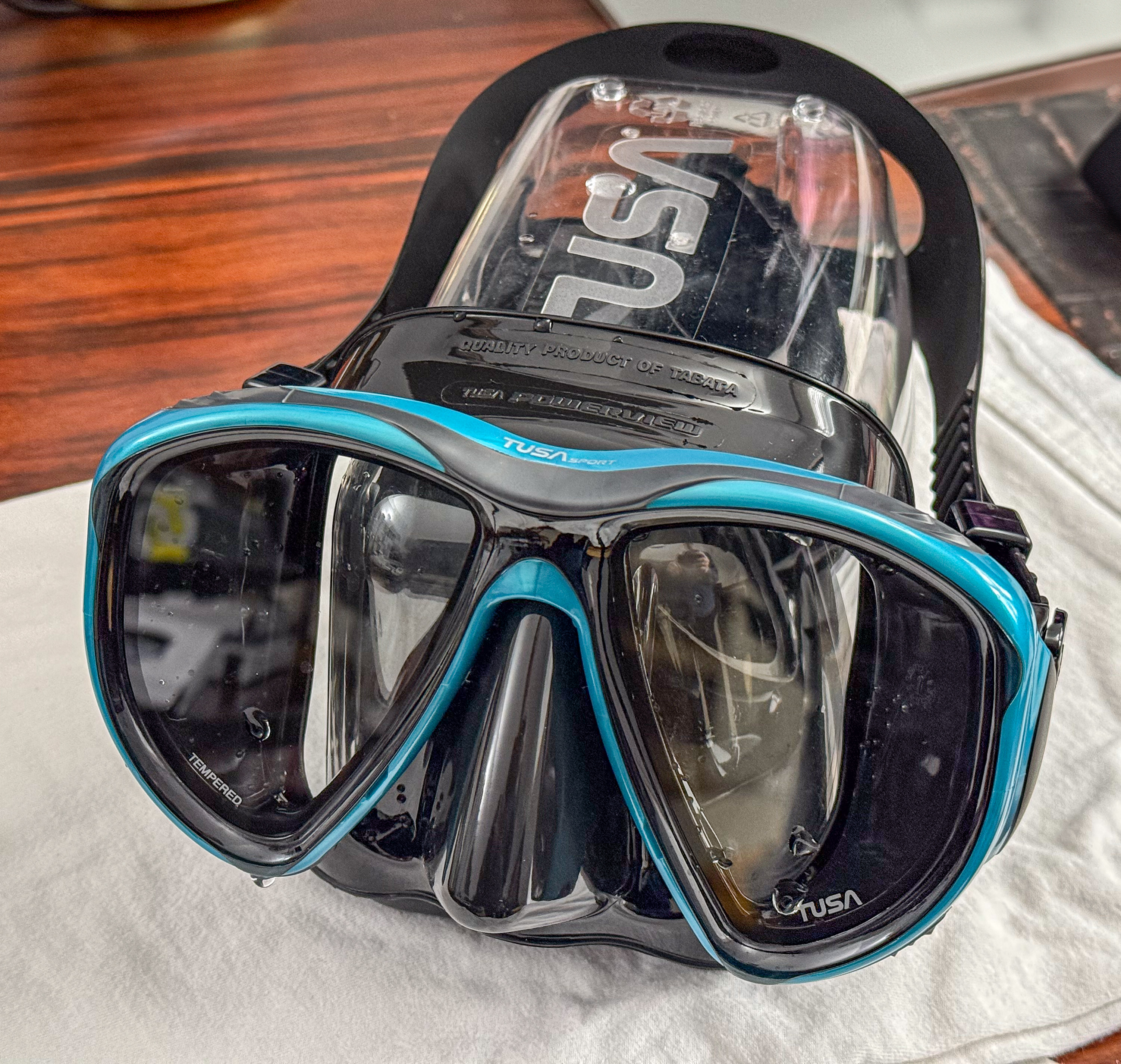
Occasionally, I supplement cleaning with an extra scrubbing with my lens scrub, because I am OCD. On the other hand, I’ve heard that you can use scrub alone for cleaning in a pinch. In addition, one key ingredient of a defogger is surfactant – that’s basically soap. So I presume that you can use your defogger to clean you lenses too, if absolutely necessary. Don’t quote me though.
Apply the thinnest film of defog
The defog film only needs to be a few hundred nanometers thick. But human fingers can’t smear a film that thin and uniform onto a lens. I found that the defogger foamed up as I smear it around. I’ve tried different smearing patterns and speed. I always get tiny defog bubbles. In practice, I found that these don’t matter, as long as 1) I left no area of the lens uncovered, and 2) the total amount of defog I dribbled on the lens is tiny. Cover the entire lens, because untreated areas obviously allow water droplets to condense and bead up. Use minimum defog, because excess defog glob into chunks and degrade performance.
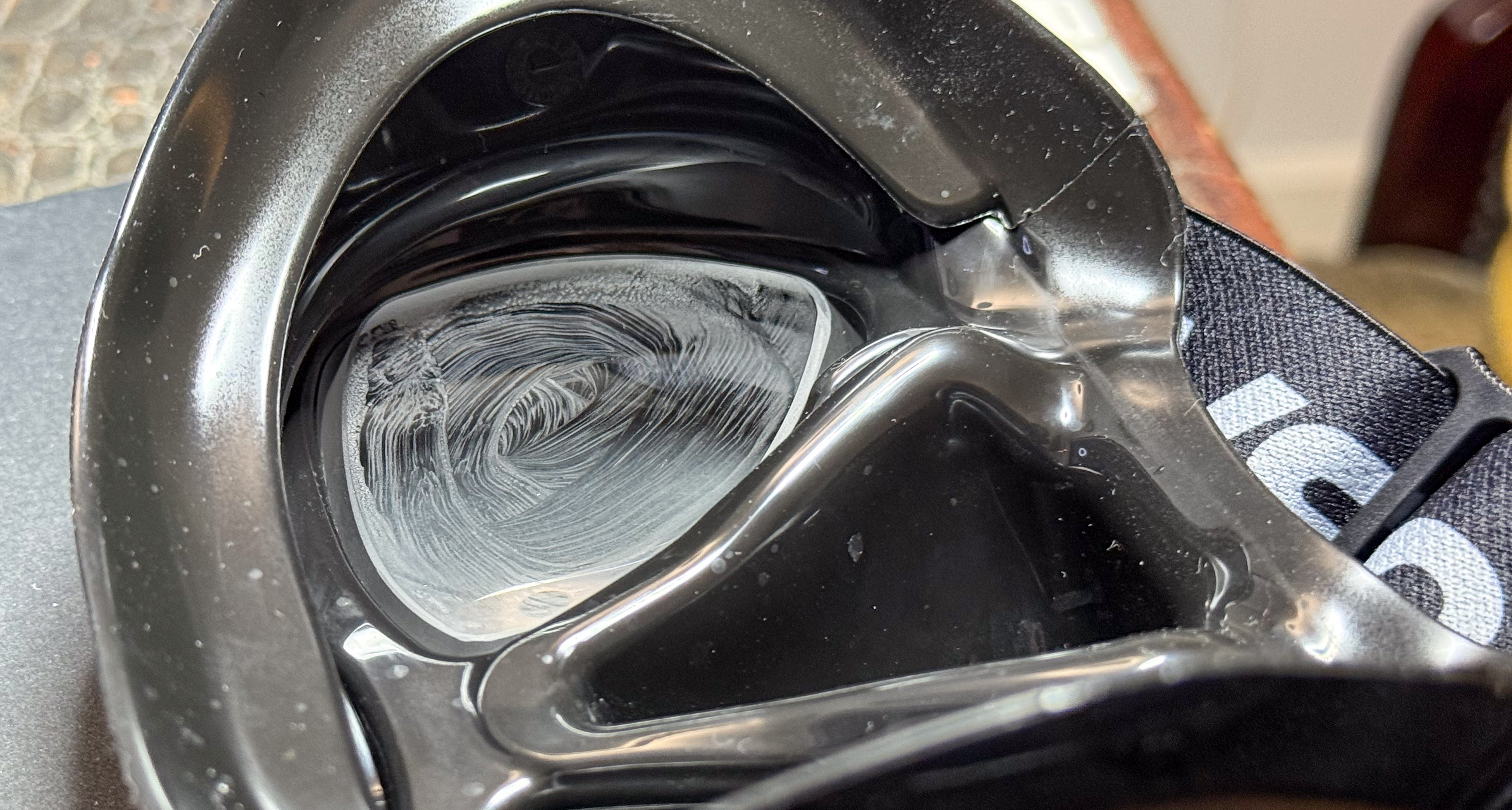
Most sources quote a “pea-size” drop of defog for two lenses. But for me the amount I need is actually just a fraction of a pea. I challenge myself to let ooze out the tiniest possible amount of defog, and still manage to cover an entire lens with a hazy defog film. This is step 6 in my defogging checklist.
If you squeezed out too much defog, do not try to “rinse” excess defog away. Because human finger can’t apply the defog gel uniformly, rinsing will always wash parts of a lens bare, while leaving other parts still covered by a thicker layer of defog that remains. Just wipe away extra defog you don’t need.
This is why I don’t like the popular “rinse” reference. Instead we should talk about the need to “wet” the defog film, right before diving or snorkeling. As I mentioned, the purpose of this (step 9 in my defogging checklist) is to coat the defog film with a thin sheet of water. If a small portion of defog gets washed away in the process, that’s unfortunate, and not a goal.
Give the defog time to bind or dry up
Don’t touch lenses after you finish smearing defog evenly. All sources say that the defog film needs 30 seconds or more, to properly bind with lens surface (step 7 in my defogging checklist). I am no chemist. So I take their words for it.
Because you applied the thinest film possible, the whole defog film should usually dry up within minutes. It’s perfectly fine to leave your lenses in this prepared state for a long time. In fact, I usually cleaned my lenses right after coming back from a snorkeling session. I applied defog before going to bed. In the morning, I grabbed the mask, snorkel and fins, and I walked out of the building to snorkel.
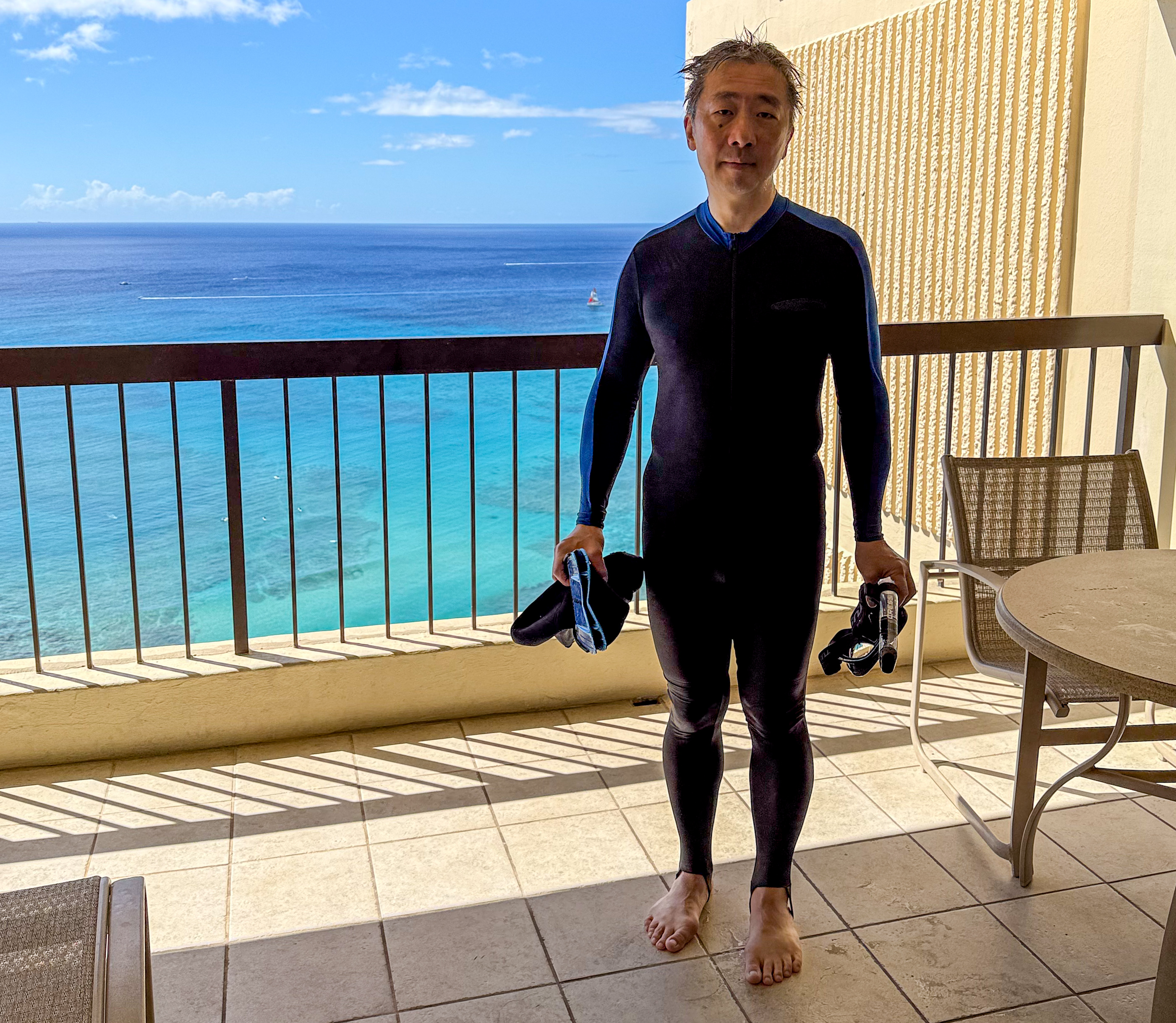
If you are going to carry prepared lenses around, it helps to pack it snugly within a container where nothing can scratch and ruin the defog film. Tempered glasses are hard to scratch with things like its own head strap. But that strap and its plastic parts may remove some defog in transit. When I drove to Hanauma Bay to snorkel for instance, I simply used the original plastic container from the manufacturer. But I tucked the strap away so it couldn’t come in contact with the inside surface of lenses. I’ve tried to apply defog at the beach before, and it was not fun with sand being everywhere. Again, I may be overthinking it. I already said I can be OCD at times. You do you.
Reduce thermal differential
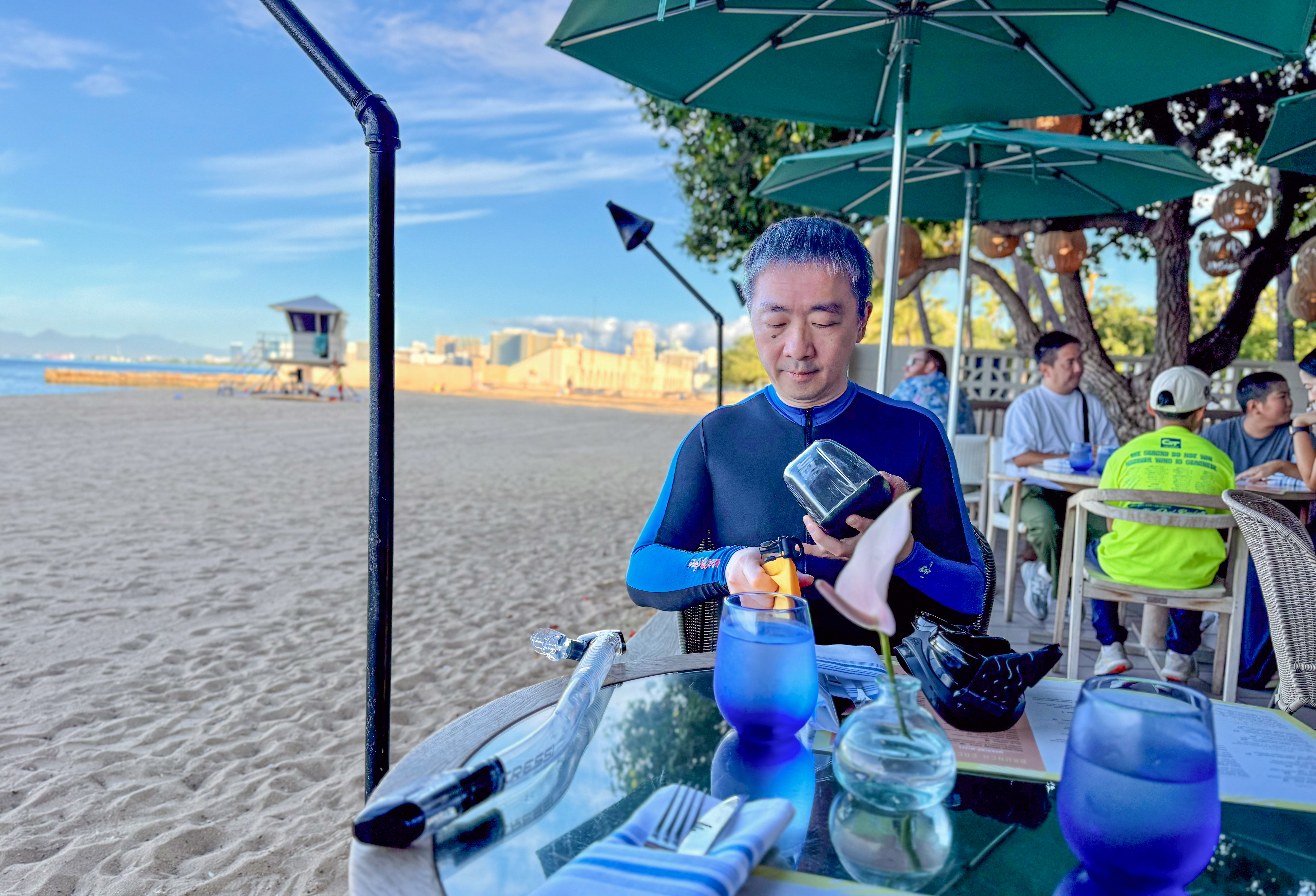
Reducing thermal differential is just a fancy way of saying: cool down your face before you strap on the mask. At the reef, dunk your head into the sea briefly. This cools your face, equalizing its temperature to that of the water. When you put on the mask and snorkel, less water droplets condense out of air trapped in the mask. So this is step 8 in my defogging checklist.
As mentioned earlier in “how mask defogging actually works”, you will inevitably get some temporary fogging when you first strap on your mask and dive into water. Before I understood why this was, I thought my defogging effort had failed. This cooling step helps reduce that initial fogging.
Coat defog film with a thin sheet of water
I’ve repeated enough times my dislike of the reference to “rinsing”, when folks refer to the last step of defogging. I like to think of this step as “coating the defog film with a thin sheet of water”.
If you talk to chemists, they’ll probably tell you that this step is best done with fresh water, and not salt water from the ocean. But in real life, you don’t usually have easy access to fresh water when and where you are ready to start snorkeling. I’ve consistently found success with a quick dip of the mask into the ocean to wet it, and then simply lift it out and drain all water from it, right before I strap the mask onto my face.
Recall that I usually defog my lenses the night before. So here, I am talking about dipping a mask with a dried defog film on its lenses. So I am literally “wetting” the defog film with salt water. No rinsing or slashing of water in the mask please. This is step 9 in my defogging checklist.
Breathe in while strapping mask on
I mentioned in “how mask defogging actually works” that breathing in while strapping on the mask created a better seal for me. I actually stumbled upon that benefit accidentally.
Before I understood that the initial and brief fogging was to be expected, I tried very hard to not breathe while adjusting the mask on my head. If I breathed “out” while making strap adjustments before a seal was formed, warm and humid air from my lung fogged up lenses despite a good defog film. Over time I found it was easier to just breathe “in”. This is step 10 in my defogging checklist.
Confirming water sheet at home
There was a eureka moment in my defogging research, before this Hawaii trip. I bought my new masks and received my prescription lenses. I did my scrubbing. And then I tried to confirm that defogging worked. At the time, however, I’d only watched the same popular YouTube videos you all have watched. Those don’t explain actual defogging principles. So I used my intuitions. My controls were lenses not treated with a defogger. And my tests were as follows:
- Apply defog
- Rinse lenses rigorously – because those videos all say to rinse
- Dry lenses – because I thought I was recreating windshield defogging
- Huff onto lenses to see if they fogged up
This was of course a completely flawed experiment, for reasons I’ve already discussed earlier. I got inconsistent and puzzling outcomes as a result.
One part of this exercise intrigued me. I found that untreated lenses were so much easier to dry. I could shake pretty much all water off them, to begin with. And if there was any left, they were droplets that curled into tiny beads. I could gently wipe them off.
In contrast, I got inconsistent drying experiences with treated lenses. Some behaved like untreated lenses – but now I know that I “rinsed” them so hard that I washed all defog away. Some had pools of water on lens surface that could not be easily shaken off. Sometimes I got a single large pool of water covering the center of a lens.
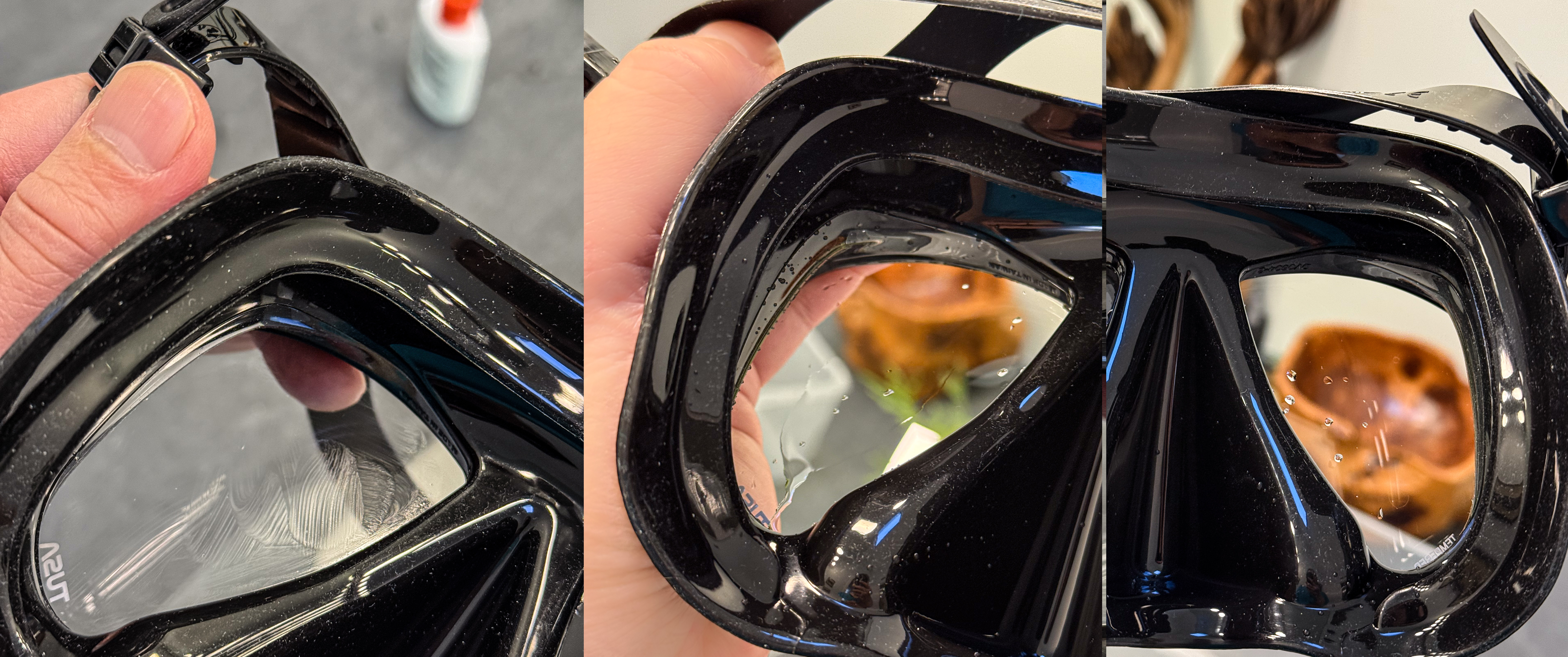
At one point I said to myself, “hang on, is that what the defog is supposed to do?”
I did more search online, before and during the trip. I ran experiments during the trip. And the rest is, as they say, this post.
So, you too can confirm proper defogging at home. Just run my defogging checklist. But instead of step 8 and beyond, wet your prepared lens with fresh water, and marvel at a large thin sheet of water covering the lens.


 Xinhai Dude